LivingMeeting vs Otter.ai
Both put AI in your meetings. The difference is where the AI stands — beside the meeting, writing it down, or inside it, doing the work with you.
Otter.ai is an AI meeting assistant that joins calls on Zoom, Google Meet, and Microsoft Teams to transcribe them and produce notes and summaries.
A notetaker records the meeting. A room can change how it ends.
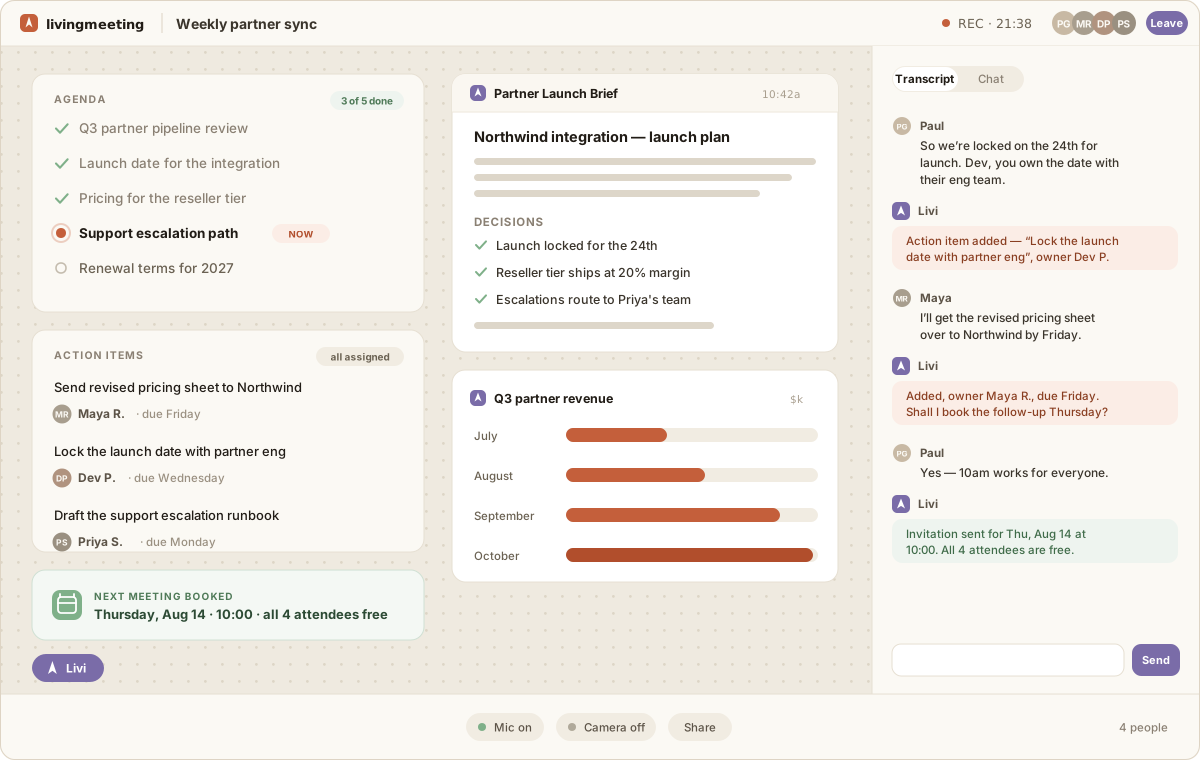
Otter's bot is a participant in someone else's meeting, so the most it can do is listen well and write it up afterwards. Livi lives in the room where the agenda, the canvas, and the calendar already are — which is why she can draft the plan you are describing, put a name on the decision you just made, and send the follow-up invitation while everyone is still on the call. The transcript is table stakes for both. The difference shows up in the week after the meeting.
Side by side
| Dimension | Otter.ai | LivingMeeting |
|---|---|---|
| Where the AI sits | Otter joins a call hosted somewhere else — Zoom, Meet, or Teams — as an additional participant. | LivingMeeting is the call. Video, agenda, transcript, canvas, and Livi are one room, so Livi acts on the meeting instead of observing it. |
| What you get out | A transcript and a written summary of what was said. | The same record, plus the work itself: documents, sheets, charts, and diagrams built on the shared canvas during the conversation. |
| When the work happens | After the call, from the recording. | During the call, in front of everyone, while people can still correct it. |
| Who owns the follow-up | Action items are extracted into notes for someone to assign later. | Action items get a named owner in the room, visible to everyone before anyone leaves. |
| The next meeting | Booked separately, in your calendar app, after the fact. | Livi reads connected Google and Outlook calendars, accounts for working hours, gathers live availability, and sends the invite before the room closes. |
| Next week's context | A folder of past summaries to re-read. | Recurring rooms roll forward: last time's decisions, open action items, and artifacts are already on the table when the room opens. |
| Meeting audio | Recording and retention policies vary by plan and configuration. | Audio is streamed for transcription and discarded after processing. Transcripts and artifacts stay in your workspace until you delete them. |
Descriptions of Otter.ai reflect how it positions itself publicly as of August 2026 and describe category-level architecture, not a feature-by-feature audit. Check their site for current details.
When Otter is the better choice
Genuinely — if any of these is you, Otter will serve you better than we will, and we would rather say so than win the wrong customer.
- Your meetings must stay on Zoom, Meet, or Teams — because a client hosts them, or a policy requires it.
- You mainly need searchable transcription across every call your company runs, including ones you don't host.
- You want notes from in-person conversations and interviews rather than from a meeting room.
Switching from Otter
Is LivingMeeting an alternative to Otter.ai?
It replaces the job, not the mechanism. Otter is an AI notetaker: it joins a meeting happening on another platform and writes up what was said. LivingMeeting is the meeting room itself, with the AI teammate inside it, so the output is the actual work — a document, a chart, an owned action item, a scheduled follow-up — rather than a record of the discussion. Teams usually move to LivingMeeting because summaries were never the bottleneck; follow-through was.
Can I use LivingMeeting and Otter together?
Yes. They do not conflict — Otter covers calls that happen on Zoom, Meet, or Teams, and LivingMeeting hosts the meetings you want to produce something. Many teams start by moving one recurring meeting, usually the one that keeps re-deciding the same things, and leave everything else where it is.
Do we have to change how we meet?
You send a LivingMeeting link instead of a Zoom or Meet link, and guests can join with just a display name — no account required. Calendars stay where they are: Livi connects to Google Calendar and Outlook, so invitations and availability keep working the way your team already expects.
What does LivingMeeting cost?
Free is $0 forever — three meetings a month, up to 30 minutes each, with Livi, the live canvas, the agenda, and the recap. Team is $10 per member per month for unlimited meetings up to 60 minutes. Business is $20 per member per month and adds branding controls and Google or Microsoft SSO. Enterprise is self-hosted and quoted per deployment.
Does LivingMeeting join my Zoom meetings like the Otter bot does?
No, and that is the deliberate design choice. There is no LivingMeeting bot that dials into a Zoom call. You host the meeting in LivingMeeting instead, which is what lets Livi edit the shared canvas, assign owners, and schedule follow-ups — none of which a guest bot on someone else's platform is able to do.
Other comparisons
Start with the one that keeps re-deciding things.
Three free meetings a month, no credit card. Keep Otter on everything else while you find out.
Start free