Introducing Livi. Because ‘great meeting’ is not a deliverable.
Hi. Quick question. What did your last good meeting produce?
Not what did everyone say. Not whether the vibes were immaculate. What left the room that another human could open, edit, own, or put on a calendar?
If the answer is “we had a lot of clarity,” I have difficult news about clarity. It is an indoor cat. The moment somebody opens Slack, it is gone.
The meeting leak
The conversation is usually fine. Smart people talk. Tradeoffs become clear. Somebody volunteers. Everyone nods at the same sentence.
Then the useful parts have to survive a small obstacle course:
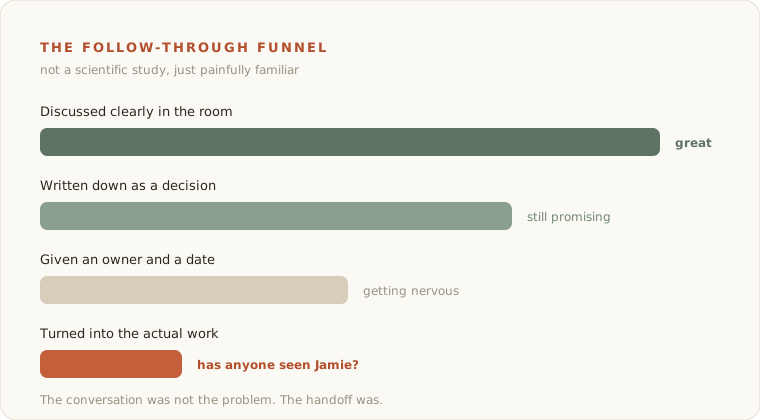
A decision lands in somebody’s notes. The owner is remembered differently by three people. The due date becomes “soon.” The chart everyone wanted remains a rectangle somebody drew with their cursor while screen sharing.
Nothing spectacularly fails. The meeting simply leaks.
Notes are not follow-through
A recap can tell you what happened. Helpful. So can a courtroom transcript, and nobody has ever left court thinking, “Fantastic, the work is finished.”
The hard part begins after the sentence “we should.” Someone still has to turn it into:
- a decision everyone can see,
- an action item with an actual owner,
- the document, chart, or plan the group was discussing,
- a next meeting at a time people can attend,
- and context that survives until the team meets again.
This is the part meeting software keeps politely assigning back to you.
Enter Livi
LivingMeeting is the meeting room itself: video, transcript, agenda, and a shared canvas in one browser. Livi works inside that room with everyone else.
While you talk, she works:
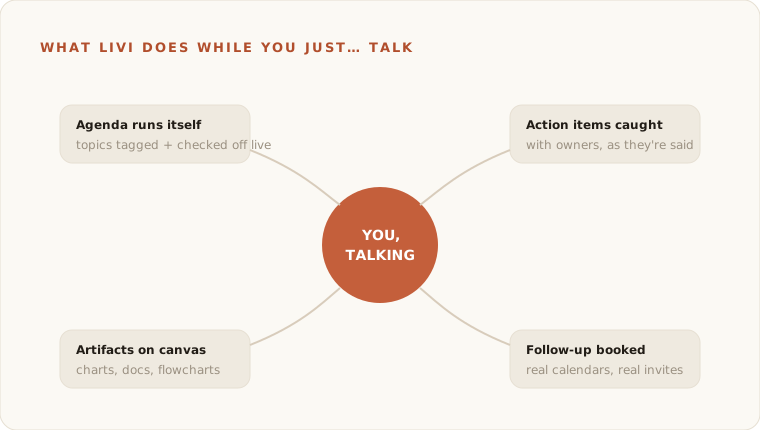
Say “I’ll get the proposal out by Friday” and Livi proposes an action item with your name and Friday attached. Everyone sees it while the context is still warm enough to correct.
Ask for a comparison table, launch plan, flowchart, or spreadsheet and it appears on the shared canvas. It is not a screenshot of work. It is the work, and everybody can edit it.
Decide you need a follow-up and Livi checks connected Google and Outlook calendars, suggests times that fit what the room asked for, gathers availability, and sends the invitation.
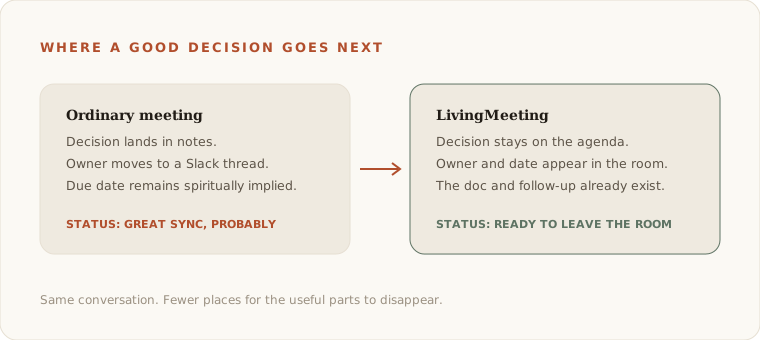
There is a brief period after every decision when everyone still agrees on what it means. We built Livi to use it.
The room remembers
The useful record does not become a transcript-shaped attic after the call.
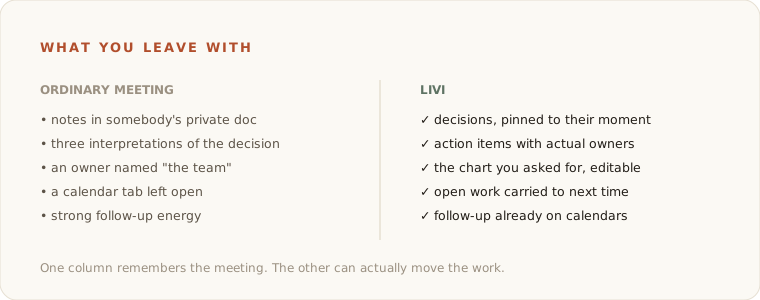
Decisions stay attached to the agenda topic that produced them. Open work has owners. Artifacts remain editable. Recurring rooms open with the unfinished work from last time already on the table. Slack, Teams, ChatGPT, Claude, Copilot, and other connected agents can pick up the permissioned context later.
In other words, the meeting can end without the work wandering off to live in six unrelated tabs.
One privacy note, because meetings contain humans
Audio is transcribed live and discarded after processing. We do not keep a recording of every “um,” throat clear, or sentence you wisely abandoned halfway through. The transcript, decisions, agenda, action items, and artifacts stay in your workspace until you delete them.
The part where I ask you to try it
LivingMeeting is free for three meetings a month. No credit card. No silent bot arriving from the hallway. Just a room where the conversation and the work happen in the same place.
Worst case, you spend thirty minutes in a meeting. Statistically, that part was already going to happen.
Stop losing the work after the meeting.
Free for three meetings a month. Leave with decisions, owners, and the work already moving.
Get LivingMeeting →